
Wail Al Hunaidi · Self-Code
You understand other people’s mistakes…
so why does it feel different when the mistake is yours?
You might say to someone you love:
- “It’s okay… we all make mistakes.”
- “You did what you could.”
- “Don’t be so hard on yourself.”
But when it’s your turn, the words can change:
- “How could I do that?”
- “I should have known better.”
- “Why didn’t I notice?”
Sometimes the hardest part isn’t the mistake itself…
It’s the way you treat yourself afterwards.

You probably know this voice well.
- The mistake ends… but you don’t finish with it.
You may go back to the situation again and again:“Why did I say that?”“I should have handled it differently.”“How did I not notice?”
And even though it’s over for everyone else…
it may carry on inside you. - You achieve something… then immediately see what could have been better.
Others may offer you praise,
while what you hear is:“It could have been better.”“It’s not that big an achievement.”“I still haven’t done enough.” - You give others an understanding you don’t easily give yourself. When someone you love is tired, you might tell them:“Rest… you’ve done your part.” But when you’re the one who’s tired:“No excuses.”“Get up and keep going.”
- Even rest can need a justification.
You stop for a moment…
then the accounting begins inside: Things still unfinished.Time slipping away.Something else you should be doing. As if rest only comes once you’ve proven you deserve it.
And perhaps the hardest part…
is that part of you is tired of this voice,
while another part believes it needs it.
Maybe you’re not hard on yourself because you want to hurt yourself.
Maybe you learned, one way or another, that pressure is what keeps you ahead.
That’s why beliefs like these may show up inside you:
- “If I ease the pressure on myself, I’ll get lazy.”
- “If I forgive myself, I’ll repeat the mistake.”
- “If I’m satisfied with myself, I’ll stop growing.”
And here, harshness becomes more than a habit.
It becomes something you’re afraid to let go of.
But you don’t have to choose between harshness and complacency.
There’s a difference between taking responsibility for your mistake…
and making yourself pay for it for hours or days.
There’s a difference between wanting to grow…
and living as if you’ll never be good enough.
There’s a difference between:
“I made a mistake.”and“I’m a failure.”
“I could have handled it better.”and“How could I be so stupid?”
You don’t need to become less ambitious
to become less harsh on yourself.
You can ask yourself to grow…
without being the punishment.
Self-CodeLearn to be responsible for yourself…
without being against yourself.
Self-Code is a practical one-to-one program of seven sessions, focused on how you treat yourself when you make a mistake, stumble, face criticism, or feel you haven’t done enough.
We’re not here to convince you that everything is great.
Nor to ask you to ignore your mistakes.
Nor to replace criticism with positive phrases you don’t believe.
We start by understanding the pattern itself.
Notice Understand Respond
- 01
Notice
You begin by noticing the moment your voice toward yourself changes.
What happened?
What did you tell yourself?
What did you feel?
And what did you do next?The goal is for a pattern that used to run automatically… to become something you can see.
- 02
Understand
We look at what is happening behind this voice.
What is it trying to achieve?
Is it trying to push you?
Stop you from making mistakes?
Protect you from other people’s judgment?Then we begin to separate:
Responsibility from harshness.
Growth from self-attack.
A mistake from your worth as a person. - 03
Respond
You practise a more aware and realistic way of treating yourself in moments of mistakes or difficulty.
A way that helps you see what happened,
learn from it,
and move on to the next step…instead of staying stuck putting yourself on trial.
What do we work on across the seven sessions?
- Foundations of self-compassionUnderstanding the idea, and what sets it apart from complacency or avoiding responsibility.
- Physical presenceNoticing how inner pressure shows up in the body, and meeting it with greater awareness.
- MindfulnessPractising noticing thoughts and feelings without becoming fully caught up in them.
- A different way of relating to yourselfBuilding a more realistic and supportive inner language, without denying mistakes.
- Common humanitySeeing mistakes and setbacks as part of the shared human experience, rather than feeling you are alone.
- The inner criticUnderstanding its voice and its function, and practising a different way of dealing with it.
- Integrating the practiceTurning what you have learned into practices you can continue after the sessions end.
Self-Code doesn’t ask you to lower your standards.
You can stay ambitious.
You can stay responsible.
And you can keep asking yourself to grow.
The difference is:
learning how to ask more of yourself…
without feeling, all the time, that you are less.
We talk about what you’re going through and what you want to change, and see whether Self-Code is right for you before you decide on your next step.
Before you begin
Is Self-Code psychotherapy?
No. Self-Code is a practical program grounded in Strategic Intervention and Positive Psychology. It is not psychological diagnosis or treatment. If your needs call for specialist psychological or medical care, it is best to work with an appropriate licensed professional.
Does self-compassion mean going easy on my mistakes?
No. The idea is not to ignore mistakes or give up responsibility, but to learn a way of facing a mistake and working on it without turning it into an ongoing attack on yourself.
What happens in the introductory call?
We talk about what you would like to work on, explain how Self-Code works, and then see together whether the program is right for you. You don’t need to make any decision before the call.

I’m Wail Al Hunaidi.
Human Behavior StrategistStrategic Intervention × Positive PsychologyFounder of Self-Code
My interest starts with a simple question:
Why do we sometimes know what we should do…
and still find ourselves repeating the same pattern?
In Self-Code, I focus on one of these patterns specifically:
how a mistake, a setback, or a sense of falling short turns into a long struggle with yourself.
I don’t work by giving you ready-made phrases to repeat.
Instead, I help you see the pattern clearly,
understand what is happening within it,
and practise a response you can use in your daily life.
The foundation I work from
I trained in Strategic Intervention in the methodology and tools of Tony Robbins and Cloe Madanes, through the Core 100 program at Robbins–Madanes Training.
I studied the foundations of Positive Psychology through a program taught by Martin Seligman.
Through Self-Code, I combine the principles of Strategic Intervention and Positive Psychology, with a focus on self-compassion, understanding the inner critic, and turning understanding into practice.
Professional memberships and certificates
- Member of the American Psychological Association (APA).
- Member of the International Positive Psychology Association (IPPA).
- Full Member of the Institute of Coaching (IOC) at McLean Hospital, affiliated with Harvard Medical School.
I hold professional certificates in:
- Research Methods in Psychology— American Psychological Association
- Behavioral Neuroscience Research— University of Alaska Fairbanks
- Fundamentals of Neuroscience— three certificates from Harvard University
- Introduction to Cognitive and Neuropsychology— University of Cambridge
My books and contributions
-
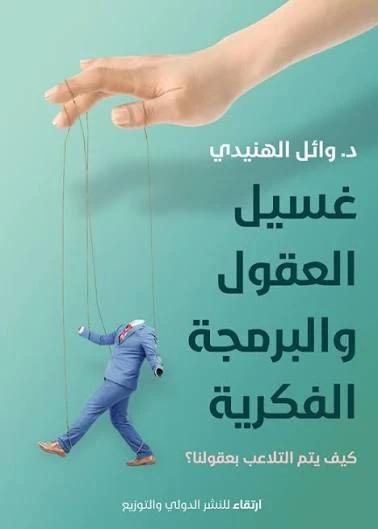 غسيل العقول والبرمجة الفكرية Brainwashing and Mental Programming — How are our minds manipulated? Written by Wail Al Hunaidi Learn about the book
-
 سيكولوجية الأمن السيبراني Psychology of Cyber Security — Understanding minds and protecting data Written by Wail Al Hunaidi Learn about the book
-

-
 Transforming Your Life — Volume III A contribution to an anthology by 20 authors. Learn about the book
You may be used to standing by everyone.
Maybe it’s time to learn how to stand by yourself too.
If you recognised yourself in something you read here, you don’t need to make a big decision now.
Start with a conversation.
We talk about what is happening with you,
what you want to change,
and how Self-Code works.
Then you decide whether the next step is right for you.